It seems that online commerce has long stopped being an “addition” to offline sales and has become a full-fledged growth engine for small and medium-sized businesses. For European and American brands, this means one thing: if you fail to keep up with the new wave, customers turn to marketplaces, competitors’ stores, and brands that invest in technology faster. That’s why it’s crucial for businesses not only to follow industry news, but also to understand how the eCommerce trends of 2026 can be applied to their own store – without astronomical budgets or unnecessary bureaucracy.
How has eCommerce evolved in Europe and America?
By the end of 2025, the online commerce market no longer looks like a “pandemic boom,” but rather a new normal. In the USA, the share of online sales in total retail continues to climb, reaching around 16.3% in Q2 2025. Europe shows a similar trend: B2C eCommerce in the region keeps growing, with an expected ~7% increase in turnover in 2025 – and this growth is happening on an already high baseline, not the fluctuating recovery of previous years.
For small and medium-sized businesses, this means that online is no longer a “future option.” It is the channel where customers form their expectations of a brand: speed, transparency, convenient payment, and personalization. By 2025, the European eCommerce market is valued at roughly $0.7 trillion, with potential to grow to $1.03 trillion by 2030 – and a significant share of that growth will be driven by SMEs actively digitizing sales, marketing, and back-office operations.
The category breakdown is equally telling. Fashion remains one of the key drivers: the European online fashion and footwear market is estimated at over $120 billion in 2025, with steady growth projected through 2030. Add to that home goods (furniture, décor, multiple waves of DIY projects) and everyday consumables – from cosmetics to pet food. For SMBs, these categories are becoming a “must-have,” because customers increasingly order them online out of habit: set up auto-delivery once – and forget about it.
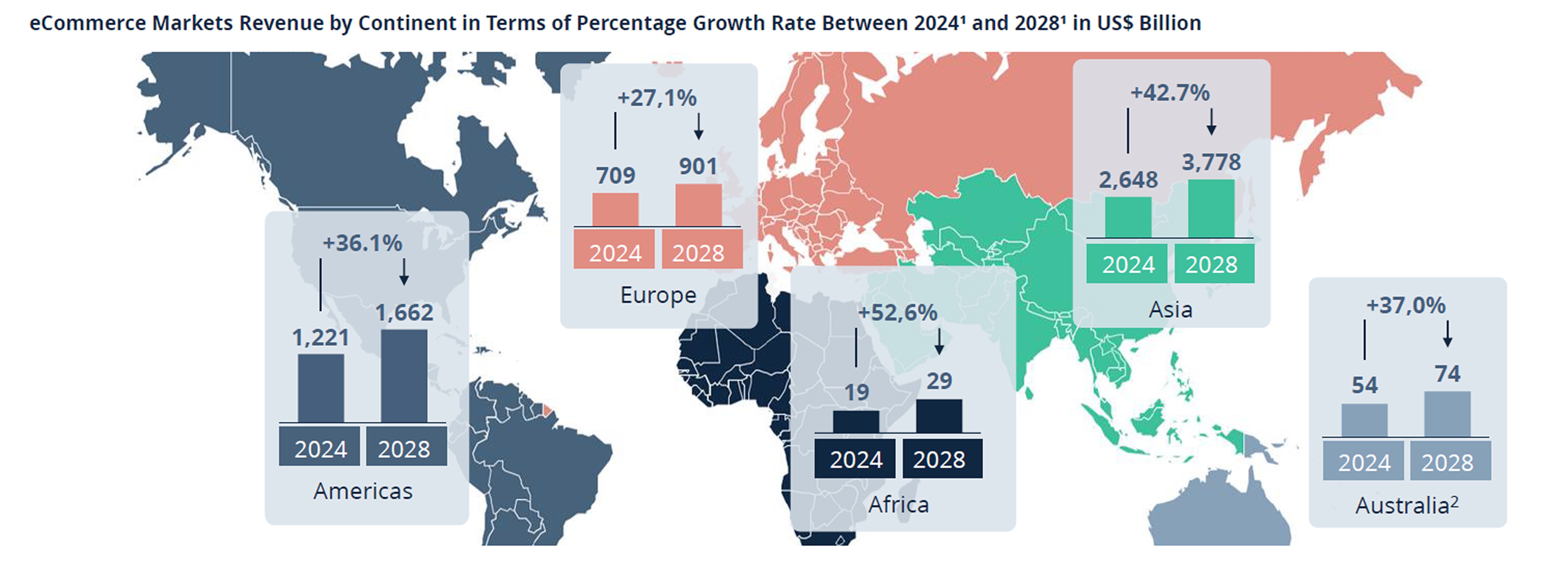
Ecommerce revenue dynamics by continent 2024-2028 in Billion USD and growth rates, (Source: Ecommercegermany).
Top Ecommerce Trends for 2026
Looking at what is happening right now, it’s easy to see that global and local online retail trends are increasingly grounded in the realities of small and medium-sized businesses. What yesterday was a “feature” exclusive to large marketplaces or luxury retail is today becoming accessible to brands with just a few SKUs and a lean team. This shift is changing the focus of ecommerce development in Europe: from simply launching a store to strategically designing architecture, logistics, and the customer experience.
AI personalization and predictive analytics
By 2026, personalization is no longer a simple “check out these products” recommendation. It has become a fully integrated system of data, algorithms, and business logic. A well-configured AI solution in ecommerce for SMBs doesn’t necessarily require an in-house data science team. Instead, it’s a smart integration of data from CRM, email, website, ad accounts, and a basic recommender system that learns from customer behavior.

Stages of generative AI integration in eCommerce operations (Source: SoluLab).
In practice, stores like VYROBY or LAFA build customer segments not only based on demographics but also on purchase patterns – what people buy, how often, and in which combinations. For warm audiences, dynamic product blocks are displayed with items that have a higher likelihood of purchase at that moment: upsells to premium bundles, cross-sells to core products, and special offers for customers who haven’t ordered in a while.
AR/VR integrations in eCommerce
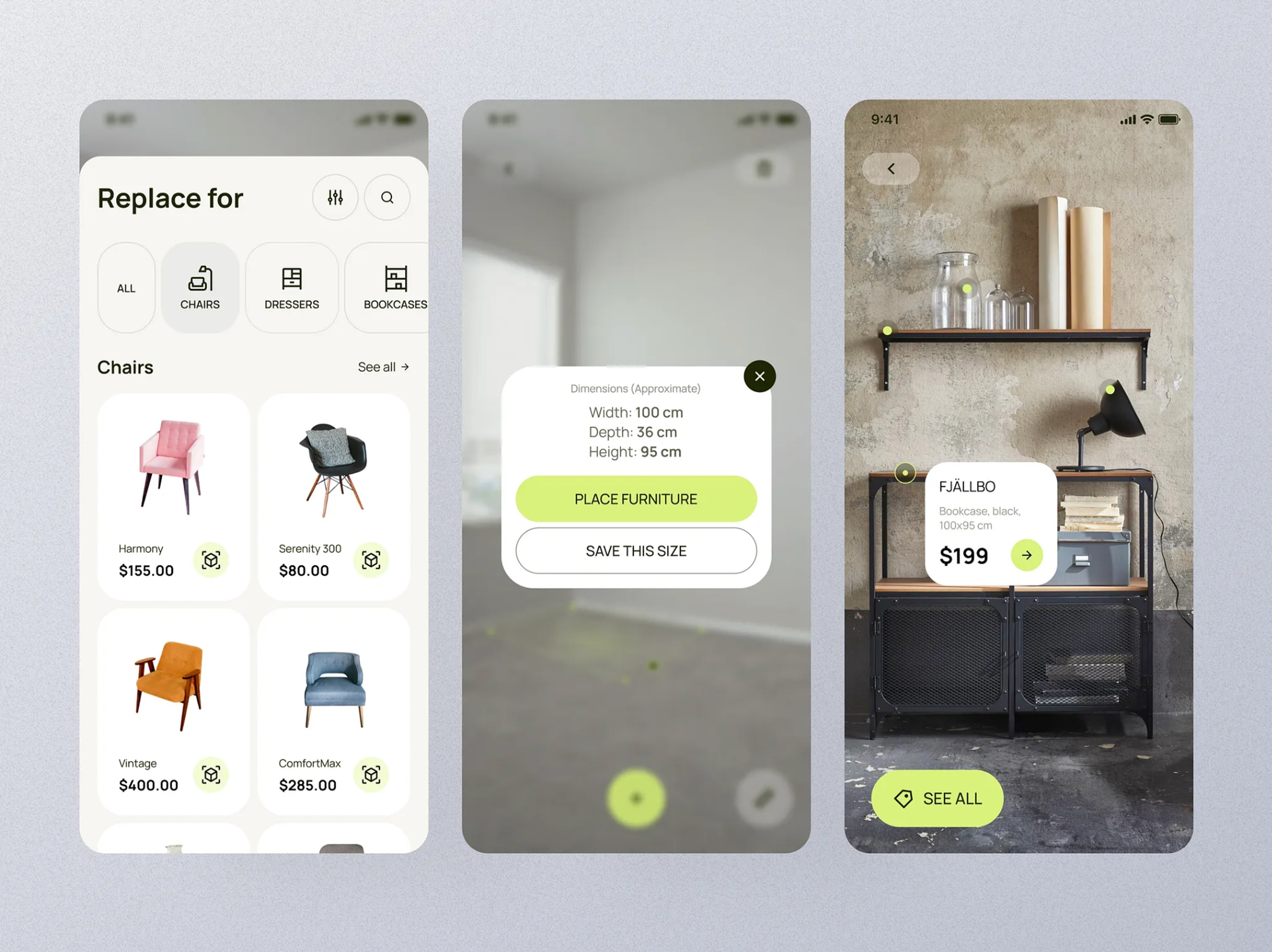
When it comes to visual products such as fashion, home decor, beauty, or furniture, the role of AR grows exponentially. Interactive try-ons, interior visualization, and product placement in real space are the core of AR in online stores. For small businesses, this is no longer “futuristic” but a realistic scenario: ready-made SDKs, web-AR, and integrations with popular CMS and eCommerce platforms make it accessible.
For fashion brands, AR try-ons for accessories or footwear bring the online experience closer to that of an offline store, allowing customers to “see themselves” in the product. By 2026, this functionality is expected to become increasingly standard in categories where visual impact is critical and competition is high.
Codeska also has experience developing an eCommerce mobile app for a furniture store that enables product visualization and selection using augmented reality (AR). Users can view furniture in their own space, explore product details including colors and dimensions, and experience precise placement of items via AR technology. The development included AR integration for accurate spatial placement and a modern user interface designed for convenience and engagement.
Omnichannel 2.0 seamless integration of offline and online
By 2026, omnichannel is no longer just “we have a store and a website.” It’s about a unified customer profile, a shared loyalty program, transparent stock visibility, and the ability to purchase wherever it’s most convenient at the moment. For European SMBs with physical locations, this may be the most practical trend: customers can easily pick up orders in-store, have them delivered to their home, or try products offline while purchasing online with cashback.
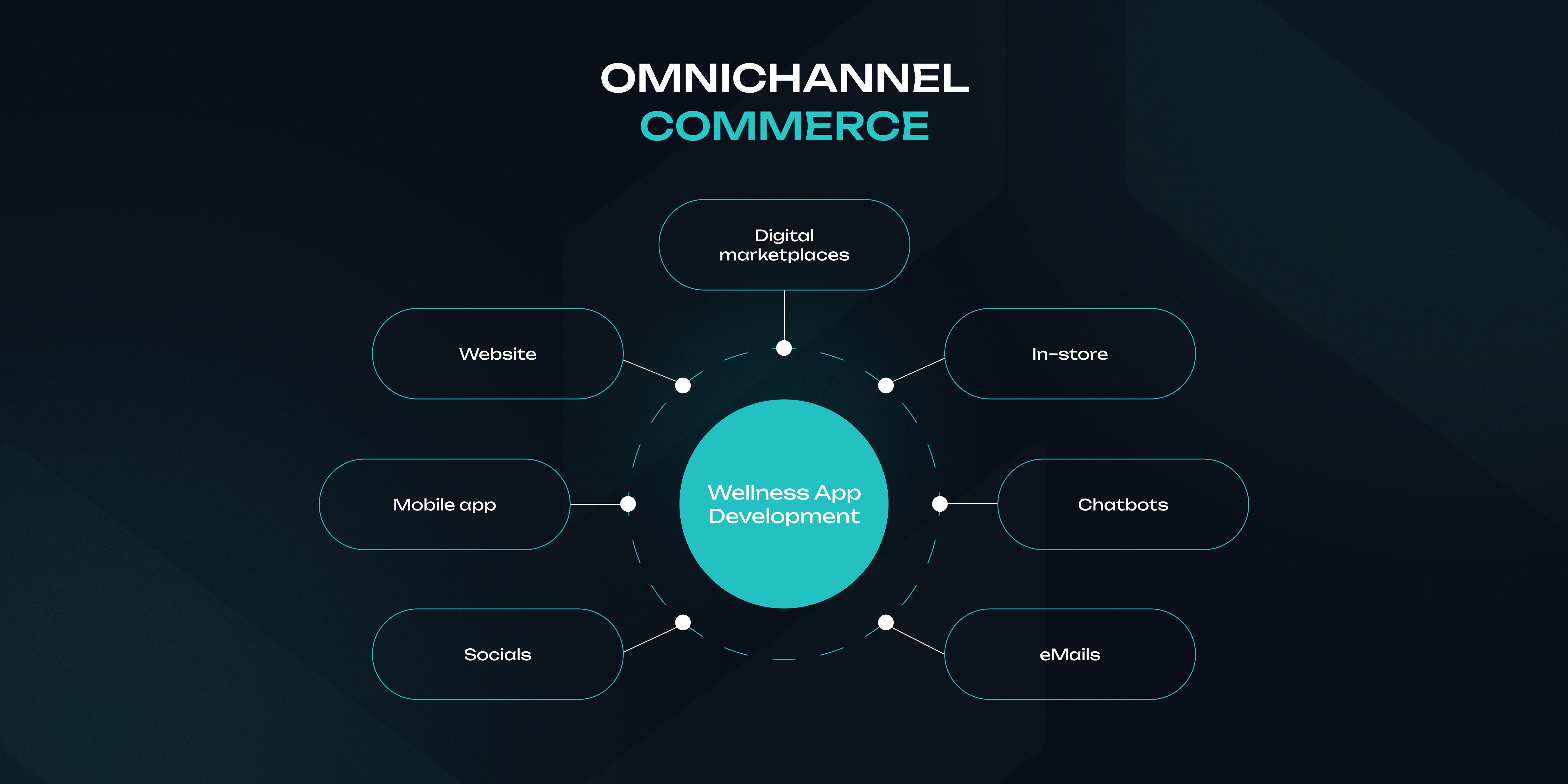
Omnichannel commerce puts the customer at the center of all touchpoints (Source: Qricualts).
For SMBs, it is important to understand that Omnichannel 2.0 is not just about technology, but also about processes: who is responsible for the data, how stock levels are synchronized, and how to encourage store teams to collaborate with online channels rather than compete with them. Concepts like eCommerce automation become highly relevant here – integrations between POS, CMS, WMS, and CRM eliminate the need for manually transferring orders or adjusting inventory.
Fast and resilient logistics solutions
Customer expectations around delivery have increased significantly in recent years. On one hand, people want “here and now”: pickup within a few hours, same-day delivery, and transparent tracking at every stage. On the other hand, in Europe and partly in the US, the trend toward eco-conscious consumption is growing: recyclable packaging, minimal plastic use, and optimized logistics without unnecessary trips.
By 2026, speed and sustainability will no longer be mutually exclusive. SMB brands are already experimenting with urban micro-fulfillment centers, consolidating shipments, and offering scheduled delivery on a specific day to fully load trucks instead of sending them half-empty. These solutions help maintain margins while meeting the expectations of generations for whom “sustainable” is not just a tag, but a real reason to choose a brand.
Payments & fintech convenient payment as a conversion factor
Another layer of change is fintech. In Europe and the US, Apple Pay, Google Pay, and PayPal at checkout no longer surprise anyone. However, by 2026, this will not be enough: customers will expect local payment methods (such as Giropay, iDEAL), BNPL services, integration with banking apps, and minimal steps to complete a payment.
For SMBs, this is a critical factor: how many potential customers are lost simply because payment is “inconvenient”? Setting up multiple payment methods, auto-saving cards, and offering multi-currency options for cross-border transactions is no longer rocket science, but standard modules in most platforms. Some brands go even further by introducing their own digital wallets, cashback systems, and integrating payments into mobile apps and social networks, preparing the ground for future zero-click scenarios.

Advanced payment technologies in eCommerce from biometrics to cryptocurrencies and AI (Source: 42signals).
All of this together creates a landscape where eCommerce trends are no longer abstract slides from conferences but transform into a concrete backlog for the eComm owner: update checkout, test BNPL, launch personalized recommendations, plan AR scenarios for key SKUs. And this is exactly where small and medium-sized businesses need a partner to help navigate the options and choose what will actually impact the P&L.
Automation development from manual tasks to “invisible” processes
For SMBs, automation is no longer about “robots taking over jobs” but about reducing time spent on repetitive tasks. RPA tools and automated fulfillment processes handle order processing, invoice printing, inventory updates, and synchronization with marketplaces and delivery services. As a result, the team spends less time on copy-paste tasks and focuses on assortment, profitability, and customer service. For players like For Better Life with catalogs of thousands of SKUs, eCommerce automation becomes a survival condition: without it, any peak period turns into chaos.
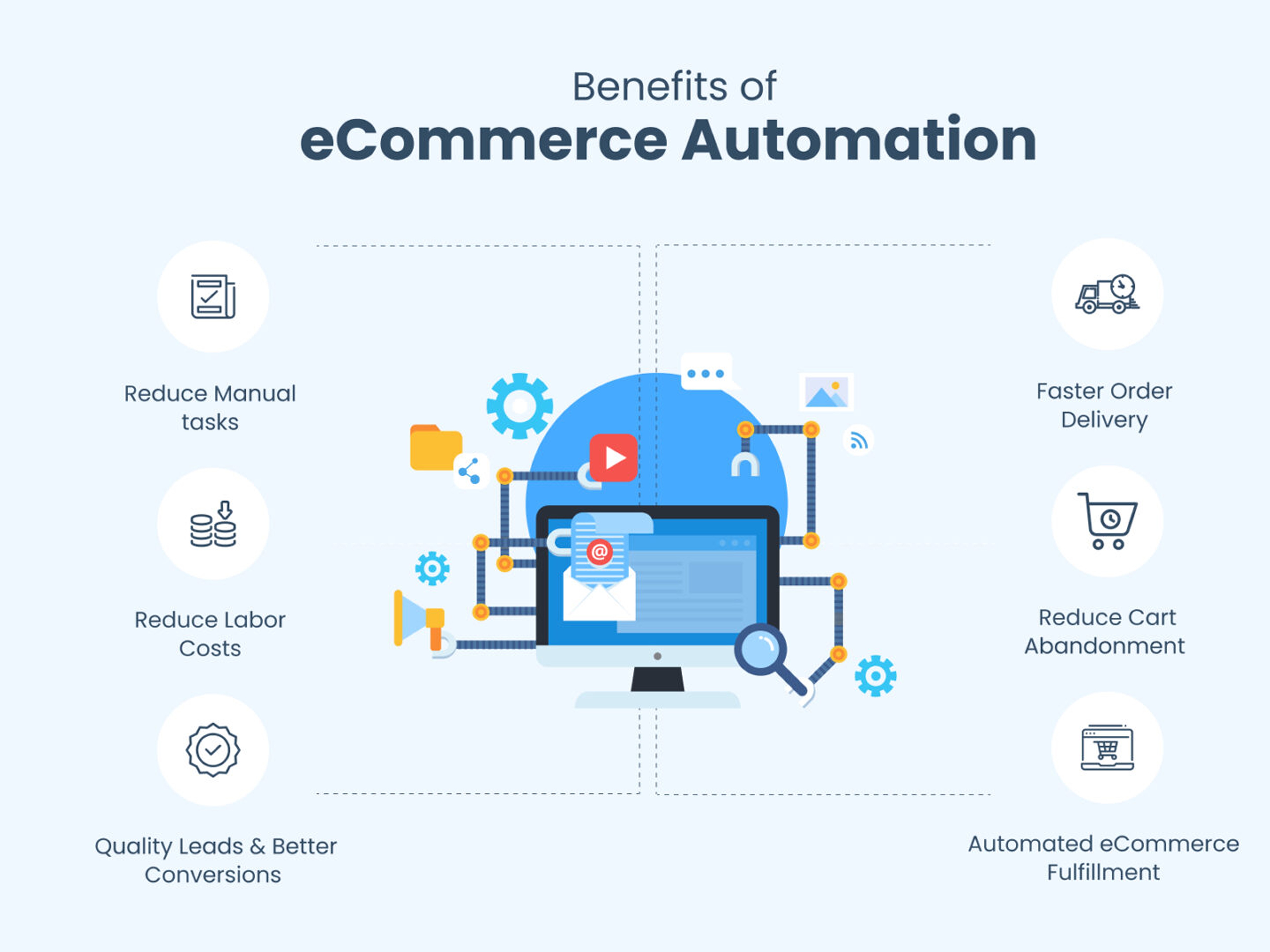
Benefits of eCommerce automation for online stores (Source: 42signals).
Headless eCommerce and modular architectures flexibility instead of built-in constraints
Traditional monolithic platforms are convenient at the start but quickly begin to slow down growth: any frontend change requires complex backend modifications, and integrations with apps, marketplaces, AR, or new payment services become separate mini-projects. The headless eCommerce approach solves this problem: the frontend (web, mobile app, in-store kiosks) is separated from the backend and communicates with it via APIs.
For SMBs, this means the ability to update the storefront without migrating the entire store, test different UX solutions, quickly connect new services, and scale to other markets without rewriting the system from scratch. A modular architecture allows choosing the best tools for each task rather than being locked into the “golden cage” of a single tech stack.

Comparison of traditional monolithic and headless architectures in eCommerce (Source: Contentstack).
AI agents a new level of service without expanding the team
Autonomous AI agents represent the next step in support and sales evolution. They can advise customers in chat, help select products based on needs, answer common questions about delivery and returns, and in the future–even create shopping carts and complete orders on behalf of the user. Unlike traditional scripted chatbots, these agents learn from real dialogues and store data, allowing them to understand context much better.
For SMBs, this is an opportunity to provide 24/7 service at the level of large players without maintaining a large support team. Additionally, they can gather structured insights: which questions customers ask most often, where the UX “pain points” are, and which products need improvement.
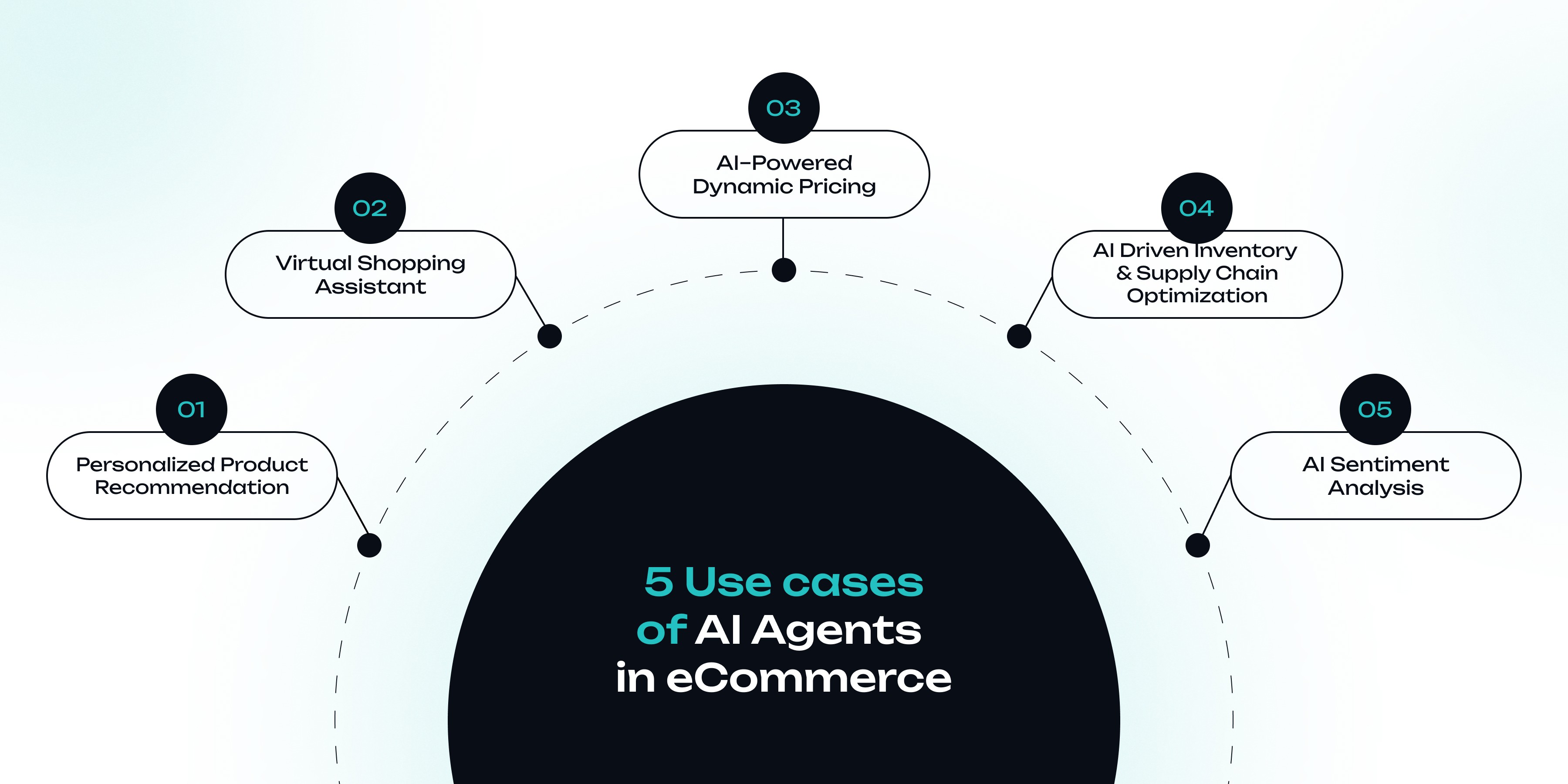
Key use cases of AI agents in eCommerce (Source: Appicsoftwares).
Zero-Click Commerce Shopping Where the Customer Is, Not Your Website
The next horizon for online retail trends is scenarios where the customer doesn’t visit a traditional online store at all. Zero-click commerce enables purchases directly from social media, messengers, voice assistants, smart speakers, or other smart home devices. The user sees an offer in their feed and confirms the order with a single click or voice command, with delivery and payment data automatically pulled from their wallet or profile. For everyday products, an additional layer is automatic replenishment: the system tracks usage cycles and prompts timely repeat purchases. For SMBs, this is a way to go beyond their own website, increase repeat sales, and ensure the brand is “at hand” exactly when the need arises.
Marketing Trends for eCommerce in 2026
By 2026, marketing will no longer be a mere “wrapper” for products. It becomes an extension of the customer experience – from the first touch on social media to the third repeat purchase a year later. For small and medium-sized businesses, this is good news: competing doesn’t require millions in media spend, but rather a clear understanding of how modern eCommerce marketing works and what truly impacts LTV.
The first trend is clear: the role of UGC and influencer marketing is growing. Customers are tired of “perfect” creatives and are more likely to trust real experiences: how a product looks at home, how it wears, and how it performs after a month. Brands like VYROBY, LAFA, or Fortify+ can use this to build a community: some share unboxing videos, others DIY ideas, others honest reviews with pros and cons. UGC becomes not just content for social media, but a separate branch of social commerce, where purchases happen directly from recommendations by friends or micro-influencers.
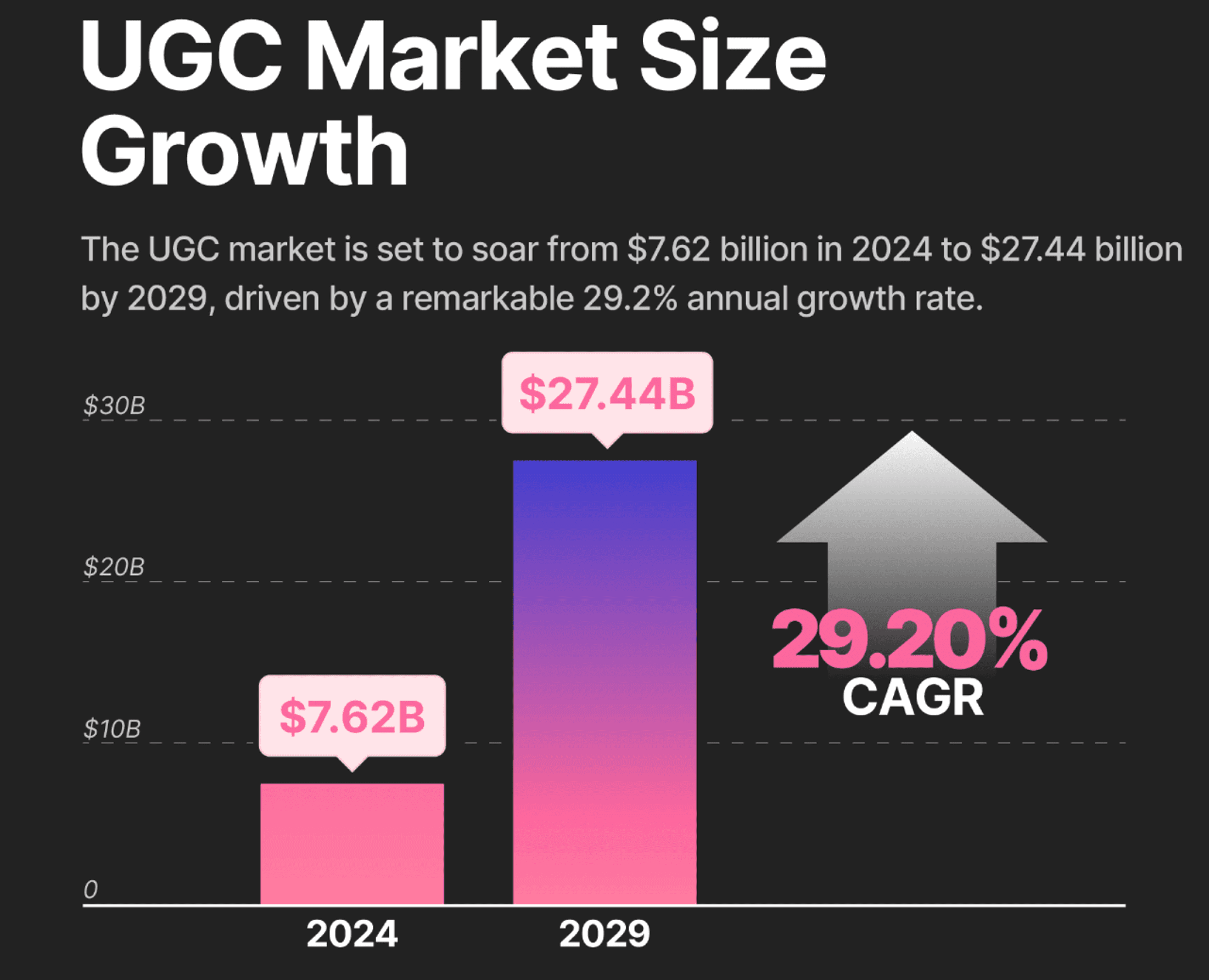
UGC Market size growth (Source: collabstr).
The second trend is AI-generated and optimized content. Balance is key: algorithms can accelerate routine tasks (product descriptions, headline variants, A/B testing), but brand tone, audience understanding, and strategy are still set by humans. For SMBs, this allows testing more hypotheses with the same team: different landing pages for segments, personalized triggers, localization for EU and US markets. AI helps run dozens of variations and retain only those that truly move metrics, not just look good in the editor.
The third trend relates to the cookieless world and the shift to first-party data. Third-party cookies are gradually disappearing, forcing brands to work with their own data: registrations, subscriptions, surveys, loyalty programs, and on-site behavior. This is actually an opportunity, not a problem: brands that establish transparent communication (“you give us data – we give you value”) gain more accurate analytics, better personalization, and a healthy email/SMS backend without “dead” lists. This forms the foundation for long-term D2C trends – direct brand-to-customer relationships without unnecessary intermediaries.
The fourth trend is reimagined lifecycle marketing. Previously, it was limited to “first purchase – email series – cross-sell.” By 2026, the customer lifecycle is treated as a living scenario where different channel combinations are triggered at the right time: some respond to in-app push notifications, others to a calm monthly email, and some need a personal offer in a messenger before a major holiday. Lifecycle design works together with AI personalization, logistics, product updates, and even store architecture – for example, headless eCommerce allows launching separate micro-landing pages for different segments without “breaking” the entire site.
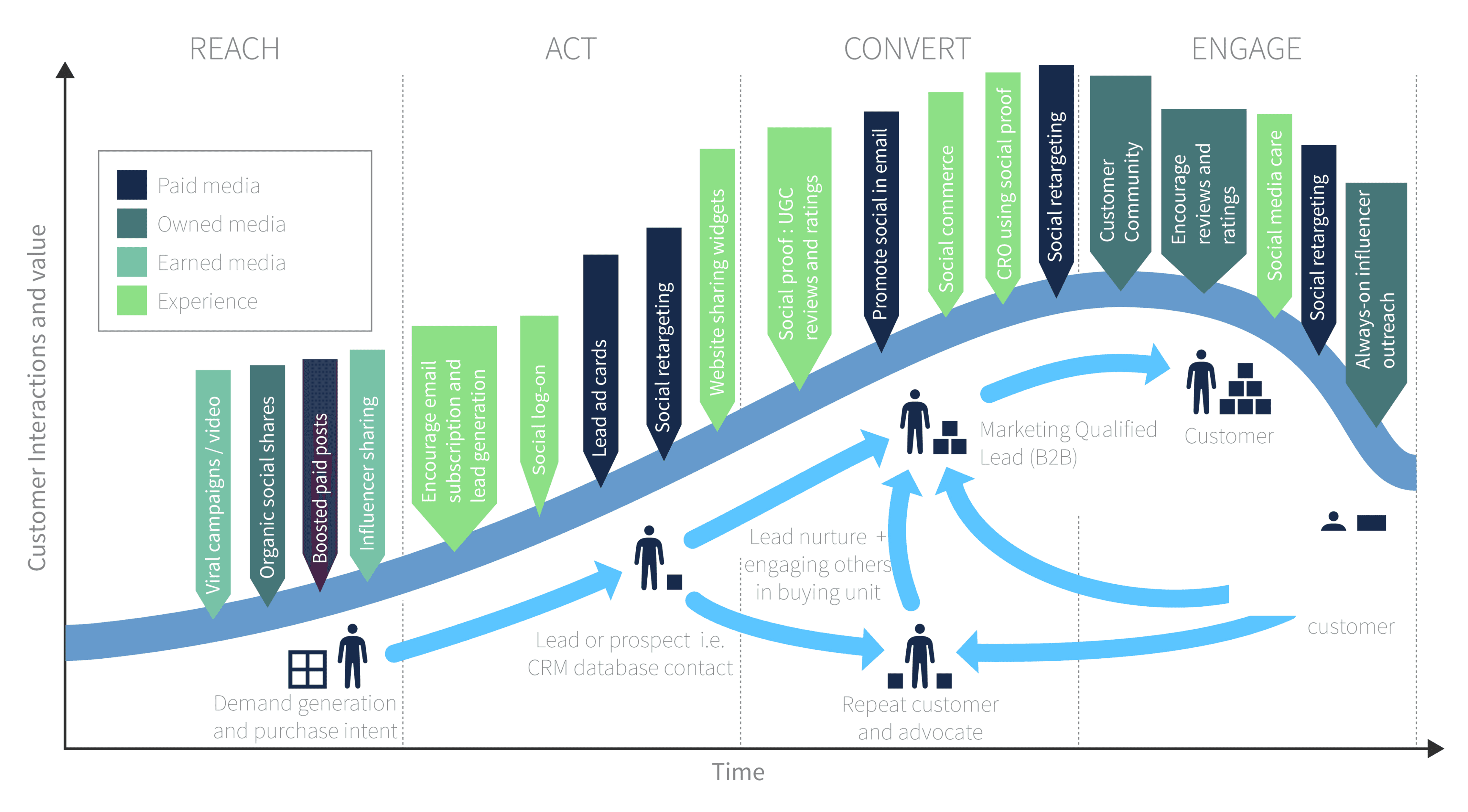
The lifecycle marketing model for eCommerce. (Source: Smart Insights).
Conclusion
Taken together, it becomes clear that the focus is not technology itself, but a way of thinking. eCommerce trends in 2026 are not a list of buzzwords but a structure where each block reinforces the others: AI personalization fuels lifecycle marketing, AR scenarios reduce returns, omnichannel connections increase LTV, and modern payment and logistics solutions remove friction at the final step.
You may not need complex AR tools this year, but it is critical to secure the foundation – a stable store, clear architecture, integrated CRM, and well-defined fulfillment processes. For others, the technical foundation already allows going further: testing voice scenarios, zero-click commerce, experimenting with new online retail trends on social media, deploying bolder D2C strategies, or confidently entering new countries to strengthen eCommerce growth in Europe.
The good news for SMBs is that some solutions can be implemented gradually right now: start collecting first-party data, set up basic analytics, launch simple recommendation blocks, test one AR scene for a key SKU, adjust checkout for local payment methods, and add the first social commerce elements. Even these “small steps” already impact next year’s eCommerce forecast – increasing conversion, average order value, and loyalty.